
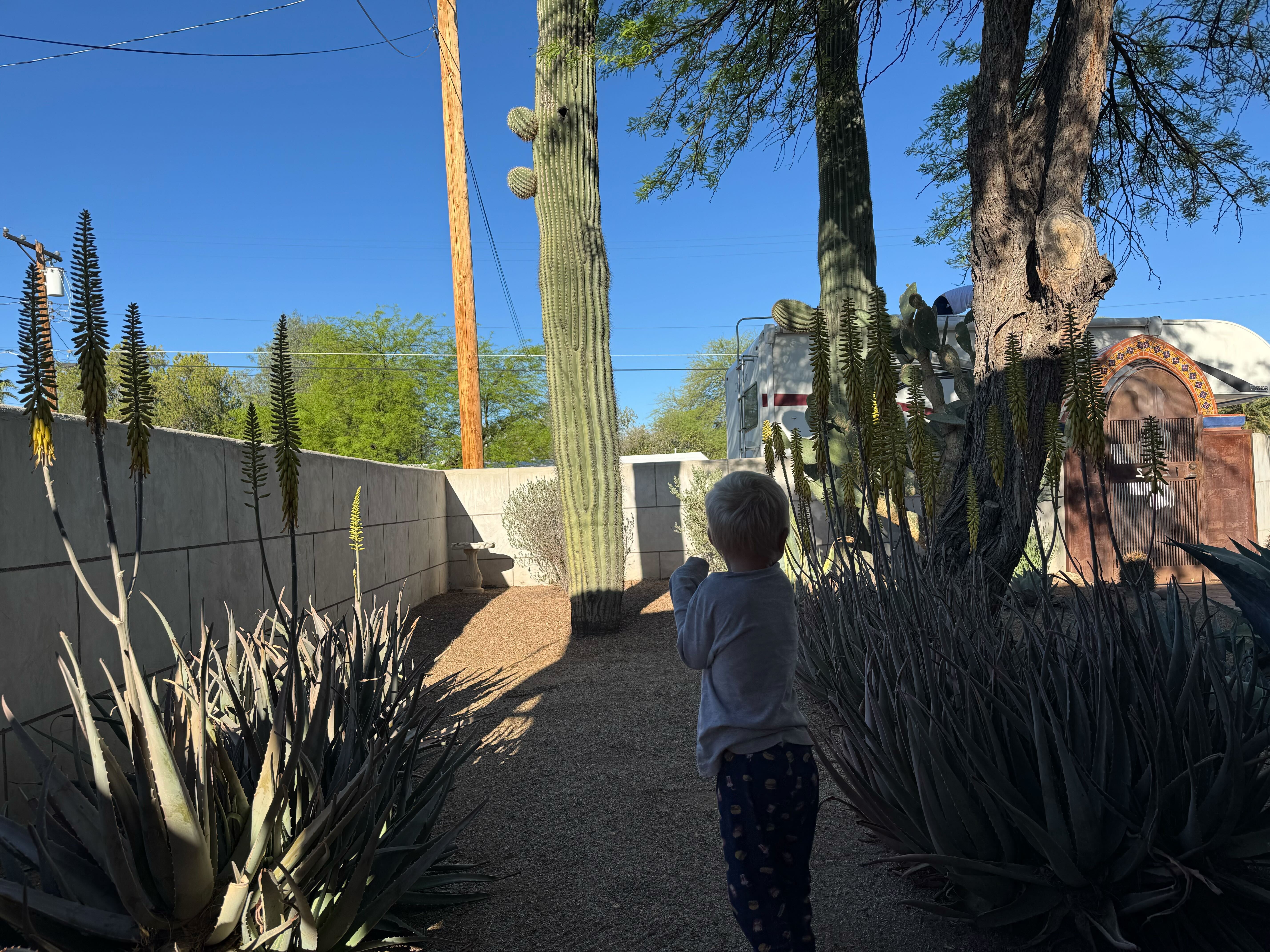
I walked outside this morning and our aloe plants are absolutely showing off. Tall stalks of bright yellow flowers shooting up everywhere — it's one of my favorite things about spring in the desert.
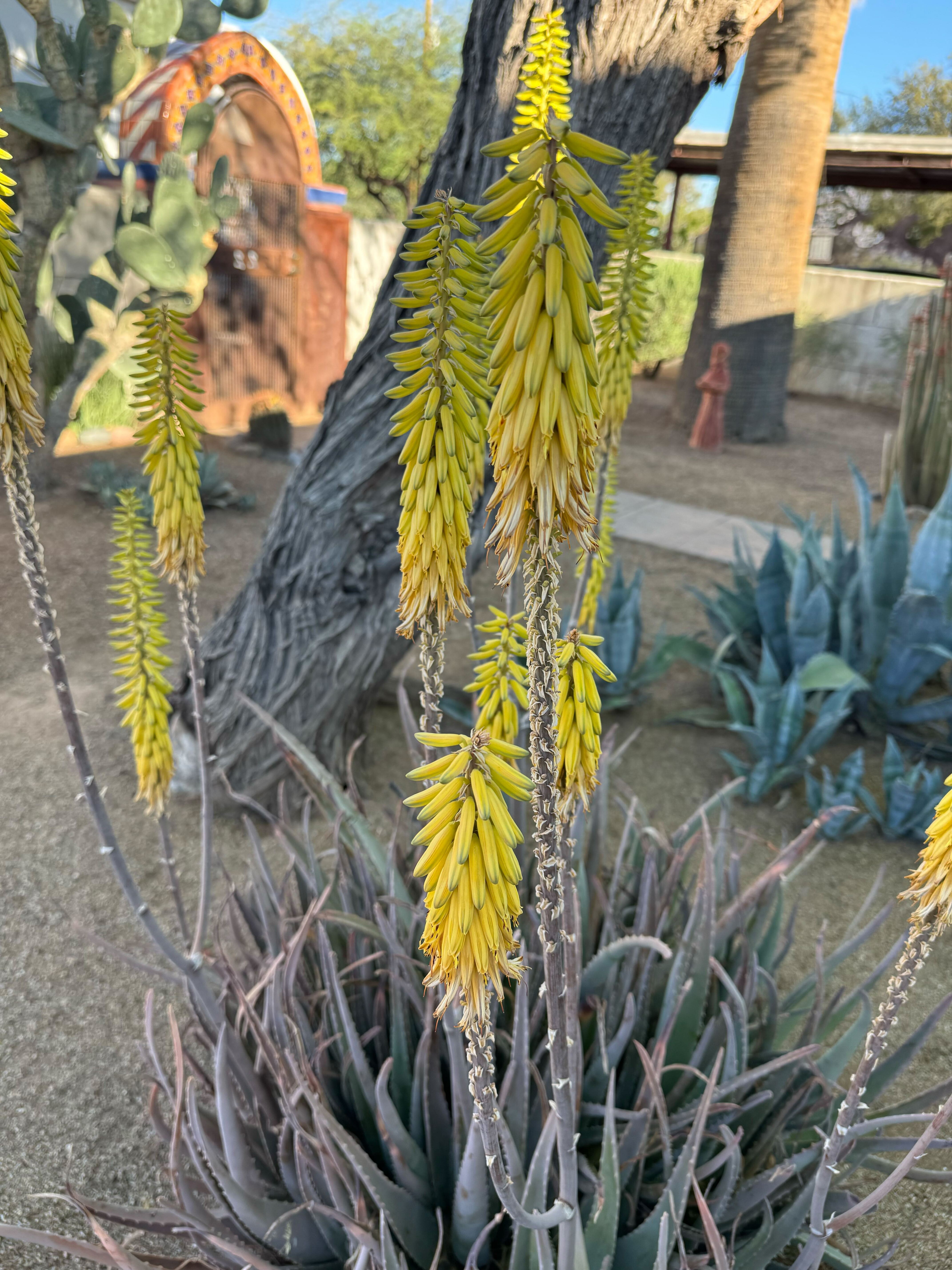
We have several big aloe plants in our yard, and honestly? They might be the most useful things growing out there. They're tough, they're beautiful when they bloom, and they give us free medicine and skin care year-round.
Here's how we actually use ours.
For Burns and Sunburns
This is the classic, and it really is the best. When someone gets a minor burn in the kitchen or a sunburn from too much backyard time (hi, Arizona sun), I just go snap off an aloe leaf, slice it open, and scoop out the gel.
Fresh aloe gel cools instantly and helps the skin heal faster. It's one of those things that works so well you wonder why you ever bought the bottled stuff.
How we do it: Cut a lower leaf close to the base — the bigger, fatter ones have more gel. Slice it lengthwise and either scoop the gel out with a spoon or just rub the open leaf directly on the burn.
For Skin Irritation and Bug Bites
My little guy gets mosquito bites that swell up huge. Fresh aloe gel takes the itch out better than anything else we've tried. We also use it for:
- Minor scrapes and scratches
- Dry, irritated patches (desert skin is real)
- Razor burn
- Any random redness or inflammation
It's gentle enough for toddler skin, which is saying something.
As a Hair Mask
This one surprised me. I started applying fresh aloe gel to my hair before washing — just massage it into the scalp and through the ends, leave it for 20 minutes, then shampoo as normal.
The difference in softness and shine is noticeable. Aloe is naturally moisturizing without being heavy or greasy. If you've got dry, desert-damaged hair (raises hand), give it a try.
For After-Sun Skin Care
We keep a jar of fresh aloe gel in the fridge during the warmer months. After a day outside, a cold scoop of aloe on sun-exposed skin feels incredible. It's hydrating, soothing, and the cold factor is chef's kiss when it's been 105°F.
Batch prep tip: Fillet a few big leaves, blend the gel, and pour it into an ice cube tray. Freeze for instant after-sun cubes. Game changer.
In Smoothies (Yes, Really)
The inner gel — the clear, gooey part — is actually edible and has been used in drinks forever. I add a small scoop to smoothies sometimes. It's basically flavorless and adds a nice thick texture.
Just make sure you're only using the clear inner gel, not the yellow latex layer right under the skin. That part is bitter and can upset your stomach.
For Houseplant Propagation
Not a "use" exactly, but aloe pups like crazy. Every few months I separate baby plants from the mother and pot them up. They make great gifts, and it means our aloe supply keeps growing without us doing anything.
Why I Love Having It in the Yard
Aloe is the ultimate low-maintenance, high-reward plant for desert living. It needs basically zero water beyond what the rain gives it. It looks dramatic and architectural even when it's not blooming. And when it IS blooming — like right now — those tall yellow flower spikes are stunning.
Plus, having free skin care and first aid growing three steps from my back door? That's the kind of natural living I'm here for. No ordering online, no reading ingredient lists, no expiration dates. Just a plant doing its thing.
If you're in a warm climate and you don't have aloe growing yet — get some. Your future sunburned self will thank you.
Do you grow aloe at home? I'd love to hear how you use yours — drop a comment or message me on socials!

About Violet
A homeschooling mom, software engineer, and nature enthusiast passionate about natural living and helping families create joyful, grounded lifestyles rooted in wellness.
Related Posts

Thanks for reading!
← Read More Posts